

Collector projects#
To set up data collection:
Add users that are going to collect data to the list of data collectors;
Create and configure data collection project.
Data collection project#
Data collection project is a resource in your Web GIS, it is a set of layers for editing. In NextGIS Web a data collection project resource is called “Collector Project”. Data collection project allows a collector to edit its layers. Web GIS owner can restrain access to the project for particular collectors.
Before creating a Collector project make sure you’ve completed the preparation:
Added users who are going to gather data to the List of collectors in the Control panel;
Created or uploaded vector layers and (optionally) added forms for them.
Set up Collector project#
To create a new data collection project, go to the Main resource group and select Set up Collector project in the menu on the right.
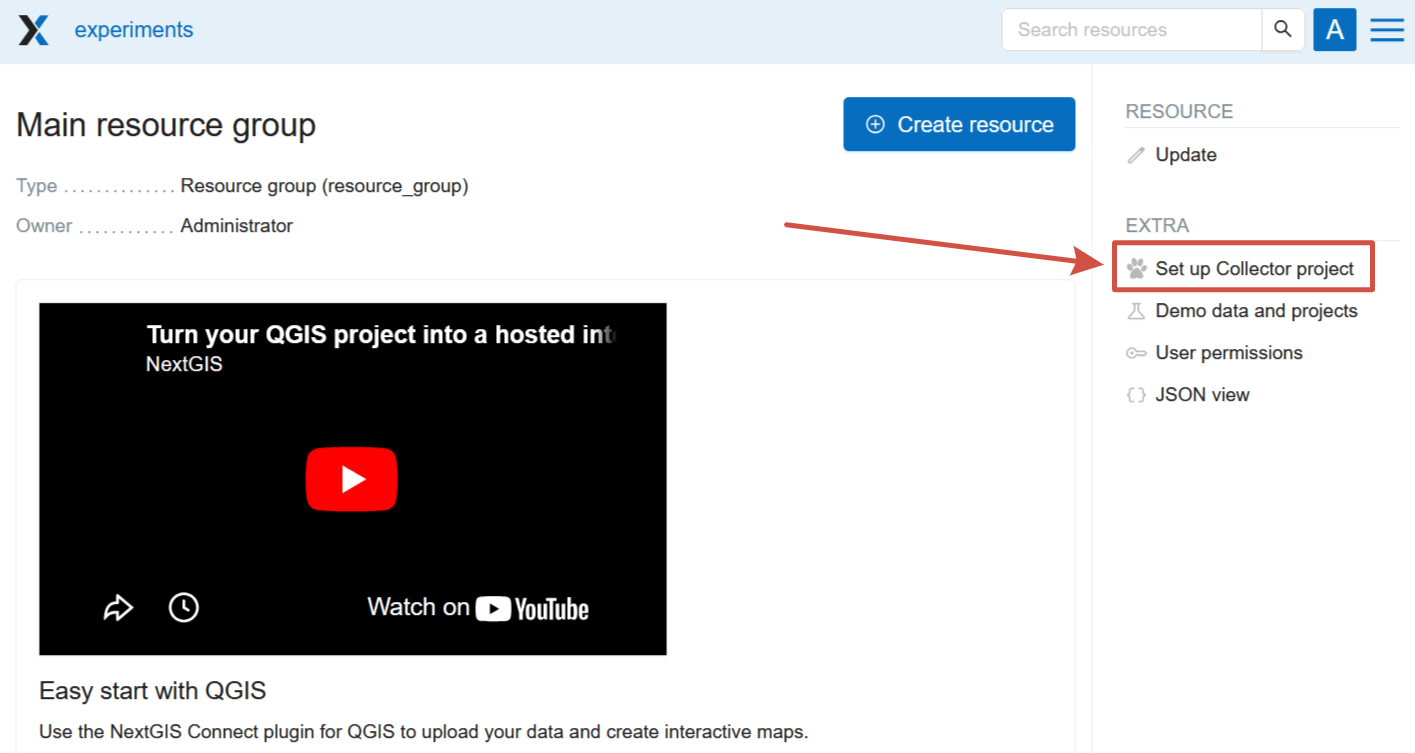
Fig. 651. Starting Collector project setup#
A wizard page opens, different from the standard resource creating interface.
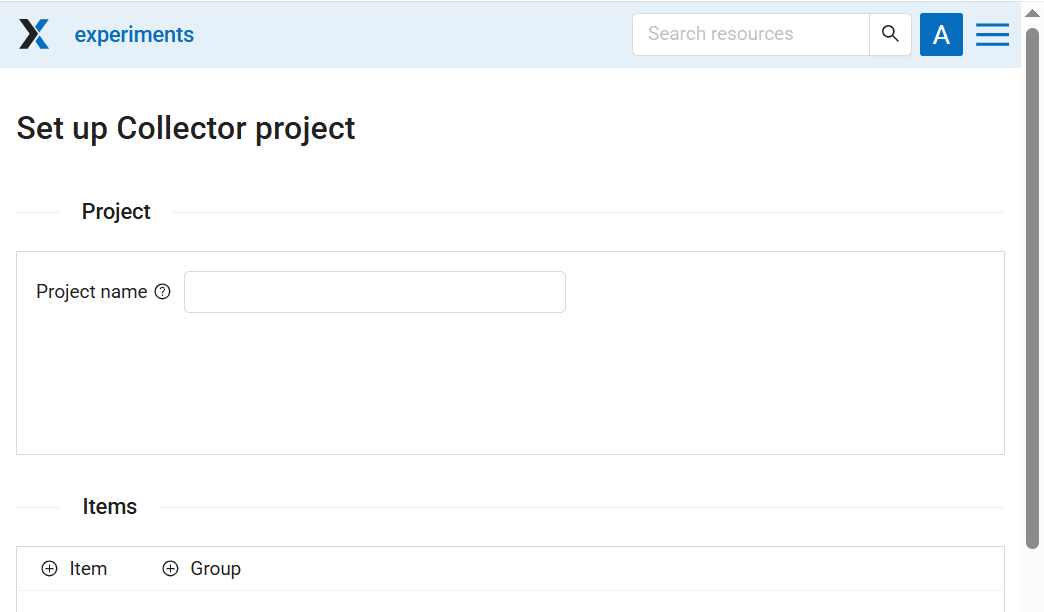
Fig. 652. Interface for quick setup#
Fill in this form to create a project.
Project name - a resource group is created in your Web GIS. This group contains the Collector project resource as well as a Web Map for data visualisation.
Items
You can add:
data collection form,
editable vector layer,
display-only layer,
basemap. A default basemap is automatically included in the project, but you can create another basemap and add is a separate item.
Click “+ Item” to add an item.
To add an editable data layer select the layer (If a layer has two or more forms, you can select one or several of them);
To add a display-only layer select its style;
To add a basemap select the basemap resource.
You can add multiple items at once, for example, several forms of the same vector layer.
Items selected to be added are marked with a tick. A layer that has a style or form(s) selected is marked with a blue dot.
Navigate between resource groups and tick the items you want to add. The Add selected button displays the total number of selected resources. To clear the selection press the  button next to it.
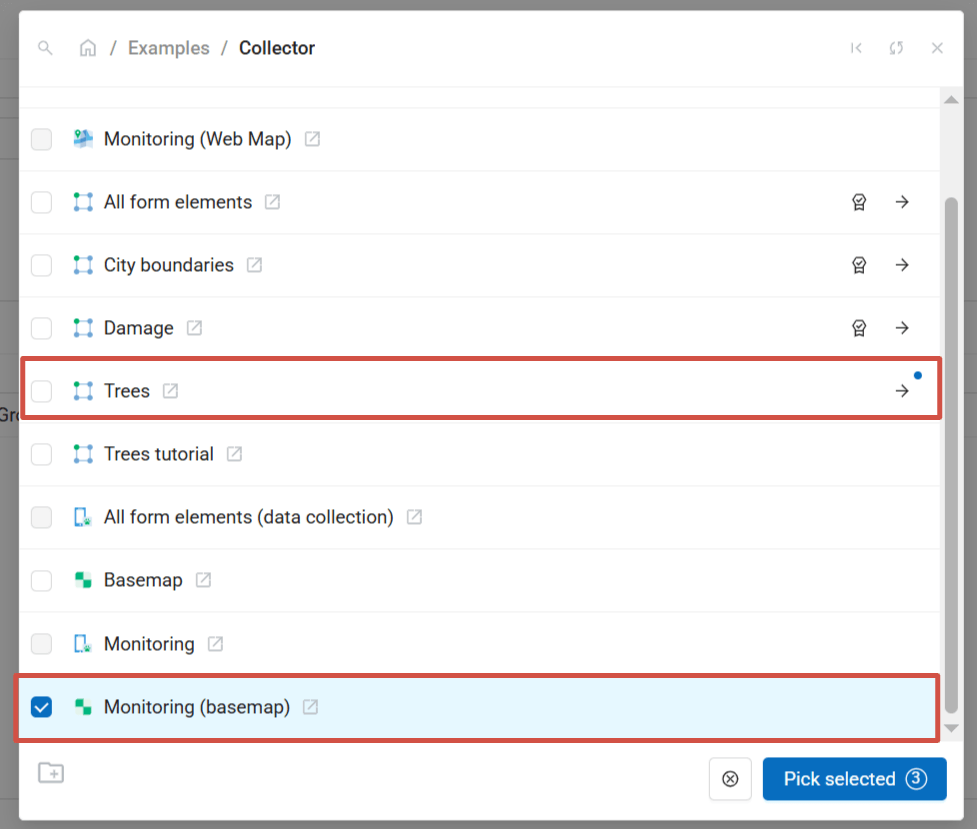
Fig. 653. Adding several items to a project. Items selected to be added are marked with a tick. A layer that has a style or form(s) selected is marked with a blue dot.#
Drag-and-drop to rearrange items within the item tree. To delete an item, press X at the end of the row.
Click on the item to see its attributes.
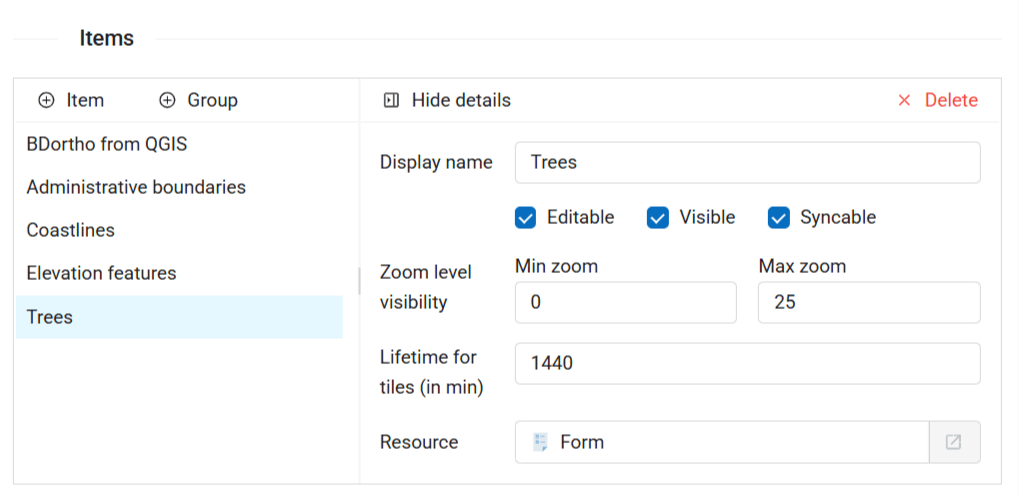
Fig. 654. Item settings#
Each item of Collector project has the following settings:
«Display name» - a layer name which is displayed in the NextGIS Collector mobile app.
«Editable» - allow or deny editing of the layer in the NextGIS Collector mobile app.
«Visible» - controls layer’s visibility in the NextGIS Collector mobile app.
«Syncable» - allow or deny synchronization of the layer with your Web GIS.
«Zoom level visibility» - defines for which zoom levels the layer is visible. It has two parameters: Min zoom and Max zoom.
«Lifetime for tiles (in min)» - time of tiles cashing (for tile layers).
To go back to the list of items, press Hide details.
Collectors - select the users that need to enter the data in this project. To give a user access to the project, mark the row with a tick.
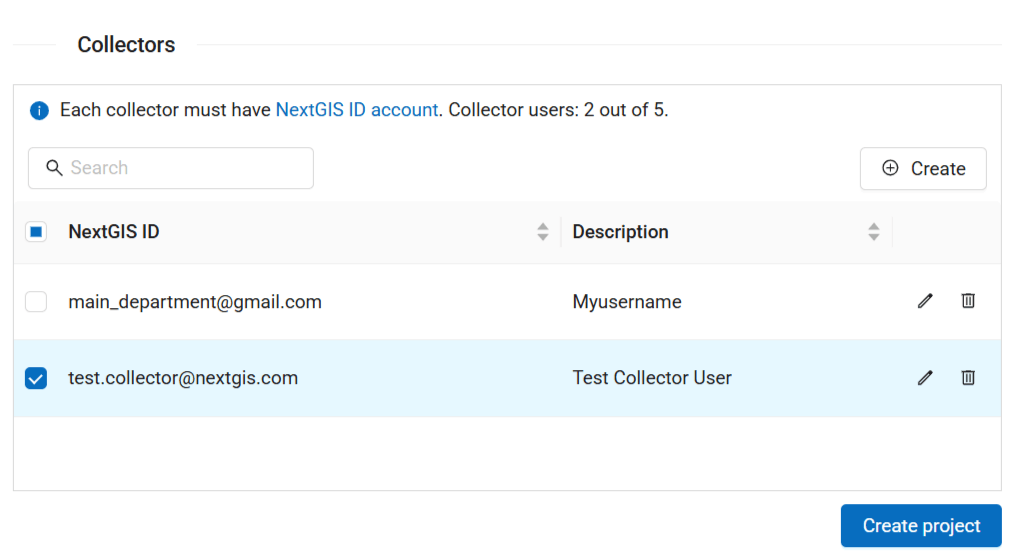
Fig. 655. Selecting collectors for the project#
Web GIS administrator can manage the list of available collectors, add or delete them. Keep in mind, that these changes are general Web GIS settings, they are instantly effective, even if you haven’t completed the project creation.
Click Create to complete the process.
The Collector project resource page opens. It is located inside the resource group with the name you set as the project name.
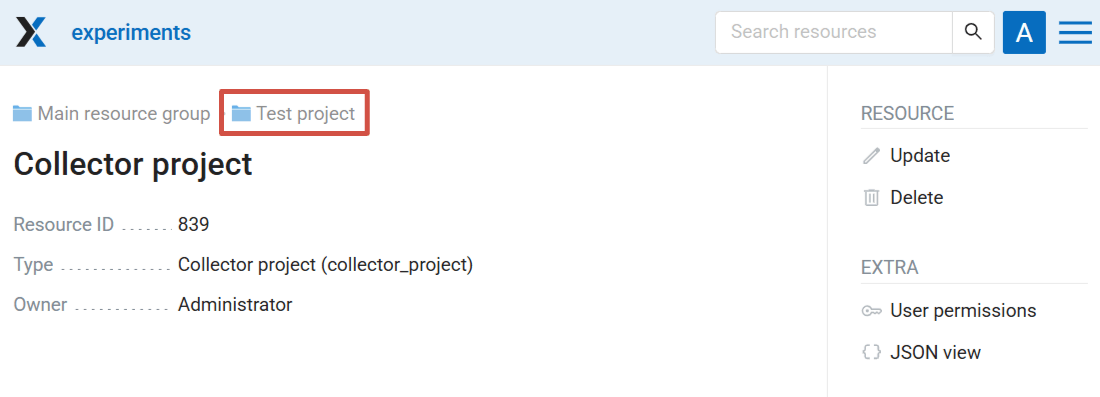
Fig. 656. Newly created Collector project#
By default this project is displayed in the Collector mobile app as “Collector project”. To set up a custom display name (it’s handy if you have multiple projects going at once), click  Update in the right menu and enter a new name (see Fig. 659.).
Click on the group name to navigate to that group. There, you’ll find three resource with default names: Collector project, Web Map with the same list of layers as the project, and a standard basemap.
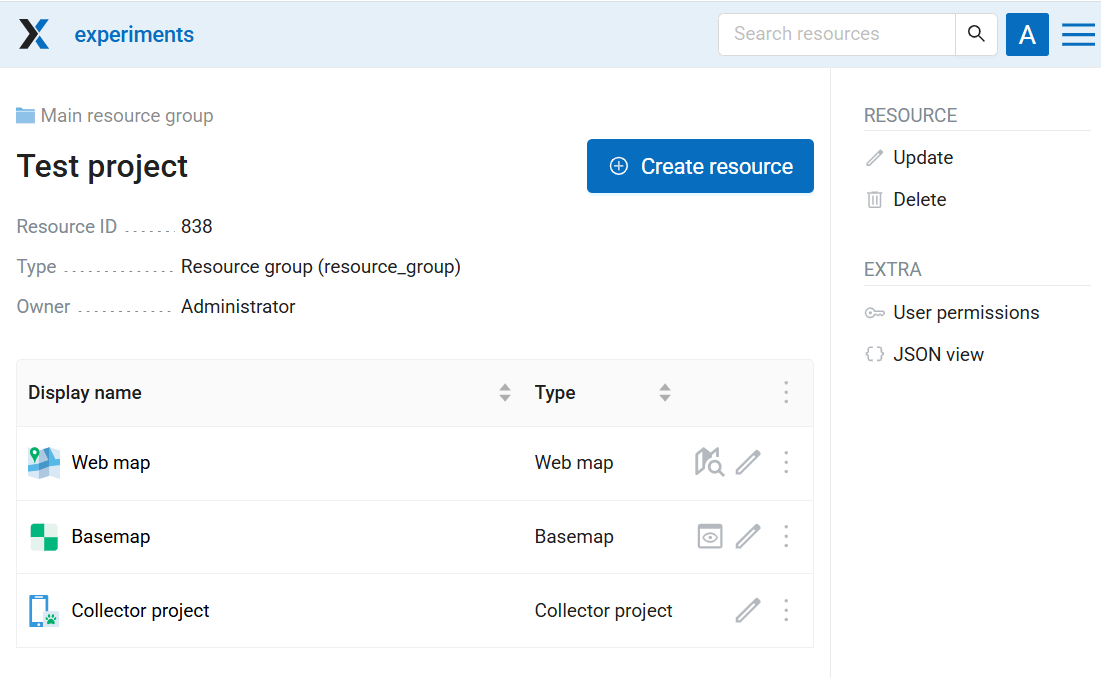
Fig. 657. Resource group with Collector project, Basemap and Web Map#
For all editable layers added to the project, a style and a form are created if they hadn’t been added beforehand. You can edit them by clicking “Edit” on the resource page on in the resource list.
If you’re an experienced user and wish to fine-tune the project as you’re creating it, you can use the standard resource creation dialog.
Advanced Collector project creation#
An alternative way to create a Collector project is via the standard resource creation dialog.
Go to the resource group where you want to create a project, click Create resource and select «Collector project»:
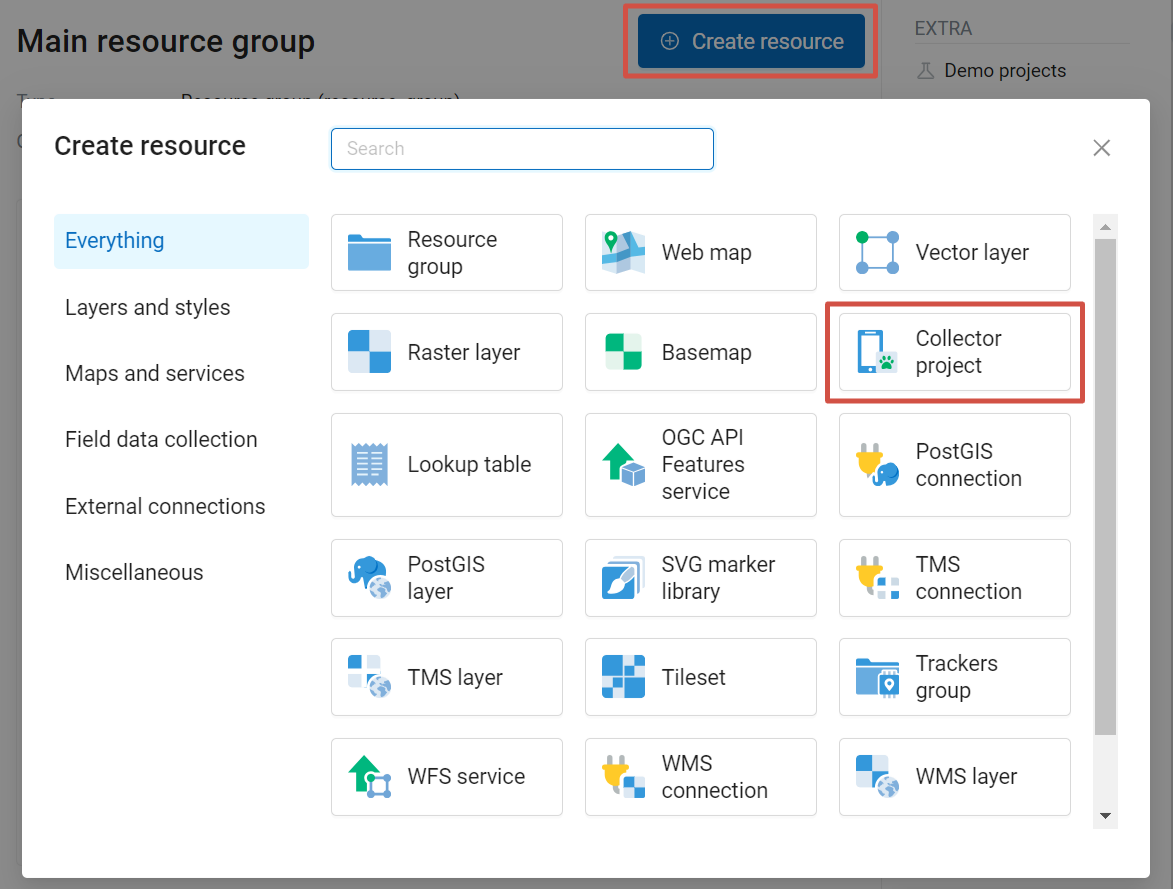
Fig. 658. Select «Collector project»#
Name your project. This name will be displayed in the NextGIS Collector mobile app :
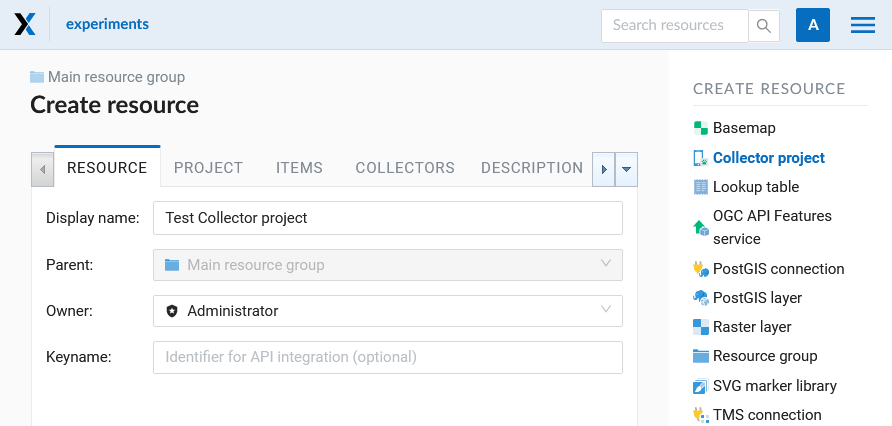
Fig. 659. Adding name for Collector project#
In the “Project” tab select “Starting screen”. The starting screen in the NextGIS Collector mobile app could be a list of forms or a map.
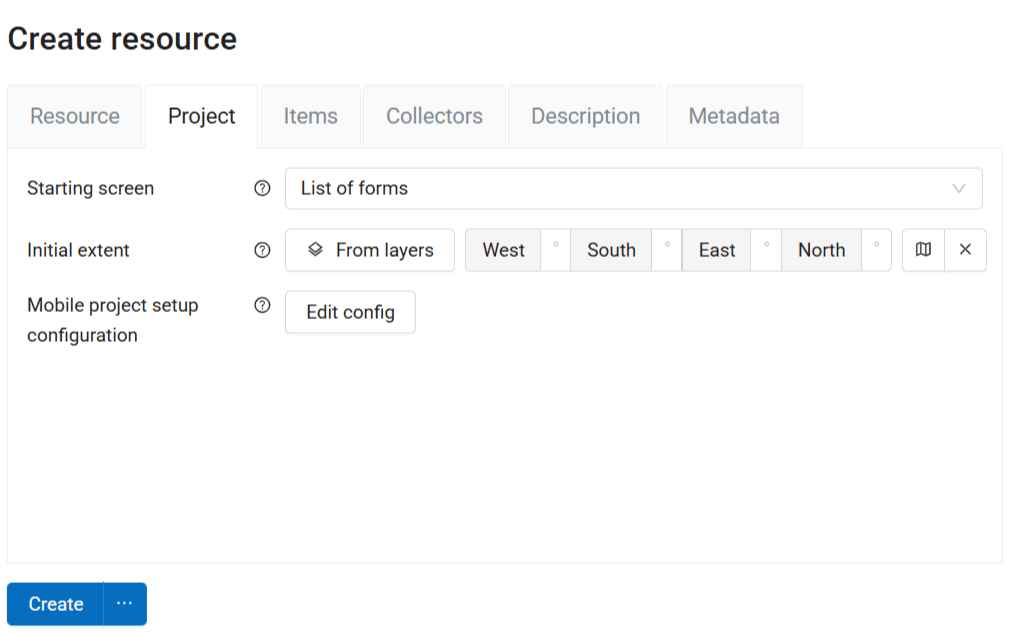
Fig. 660. “Project” tab#
On the Items tab you can Add items, Group them, Delete (X symbol on the right) and change the order by dragging items in the list.
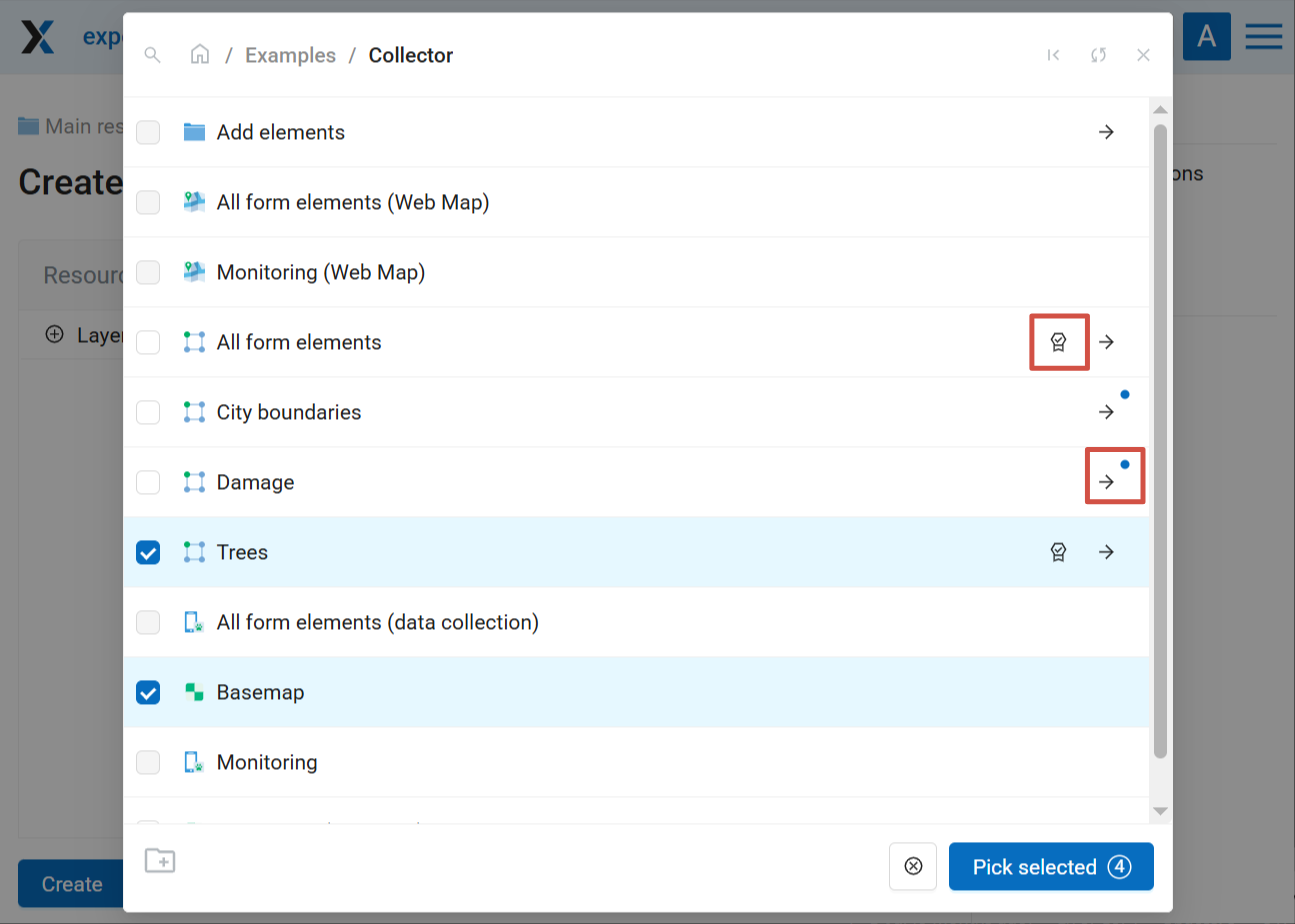
Fig. 661. Adding several items to a project. Four items selected: a basemap, a layer, a form and a style#
Click on the item to see its attributes.
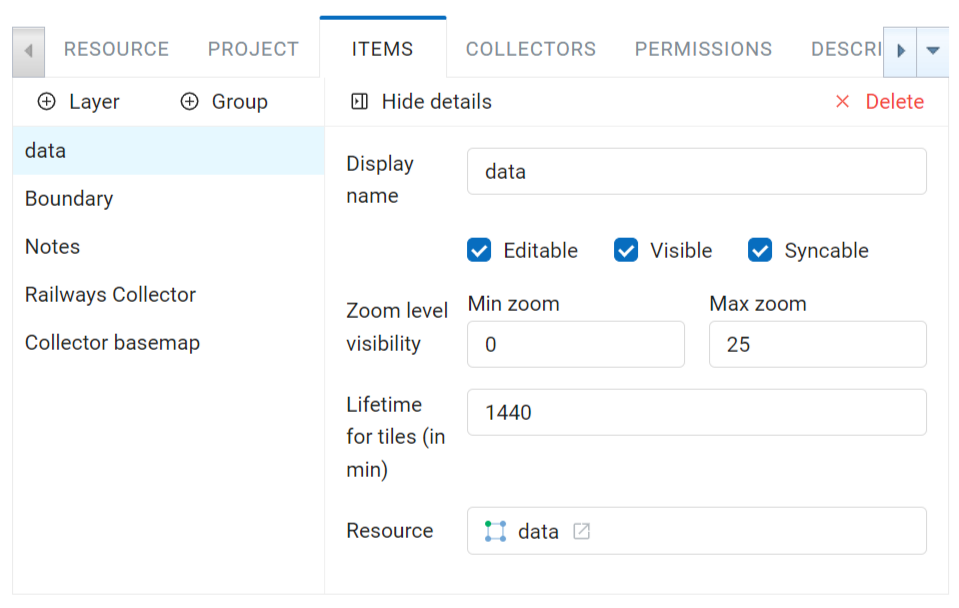
Fig. 662. “Items” tab#
Then on the “Collectors” tab tick the users participating in the project to give them permissions:
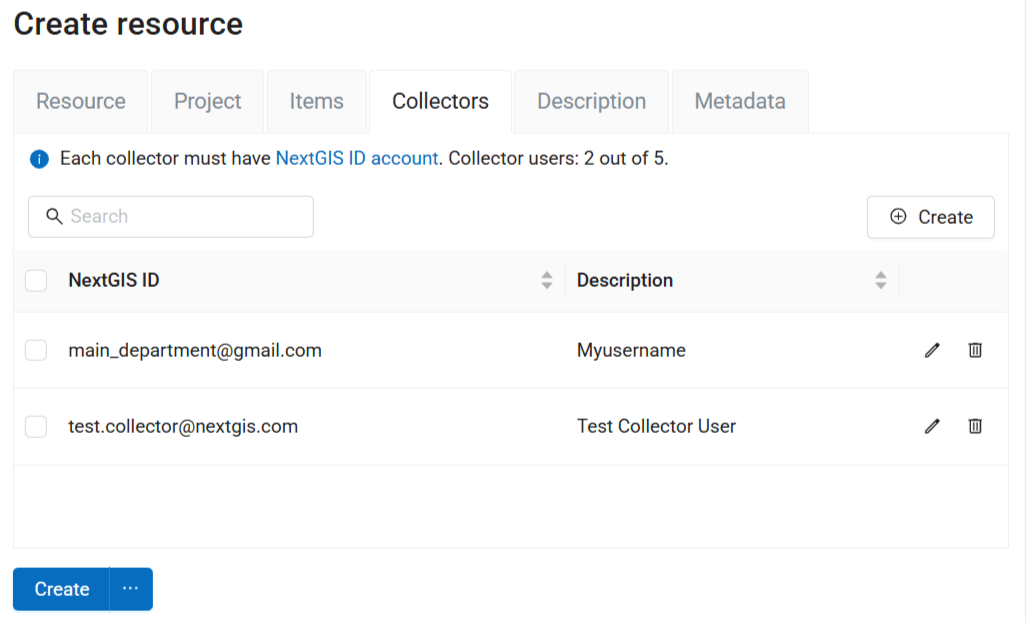
Fig. 663. «Collectors» tab#
Web GIS administrators can manage the list of available collectors in this section or in the Control panel.
Click Create.
As a result a Collector project (data collection project) will be created.
You can have unlimited number of projects in your Web GIS. In each of them you can restrain or allow access for a particular set of collectors from the list.
List of collectors#
In the Collectors section of the Control Panel, you can manage the list of data collectors.
Note
Not to be confused with Web GIS users. Add the user to your team to grant access to view and/or edit resources of your Web GIS.
In the collector list you can sort and search by NextGIS ID or description.
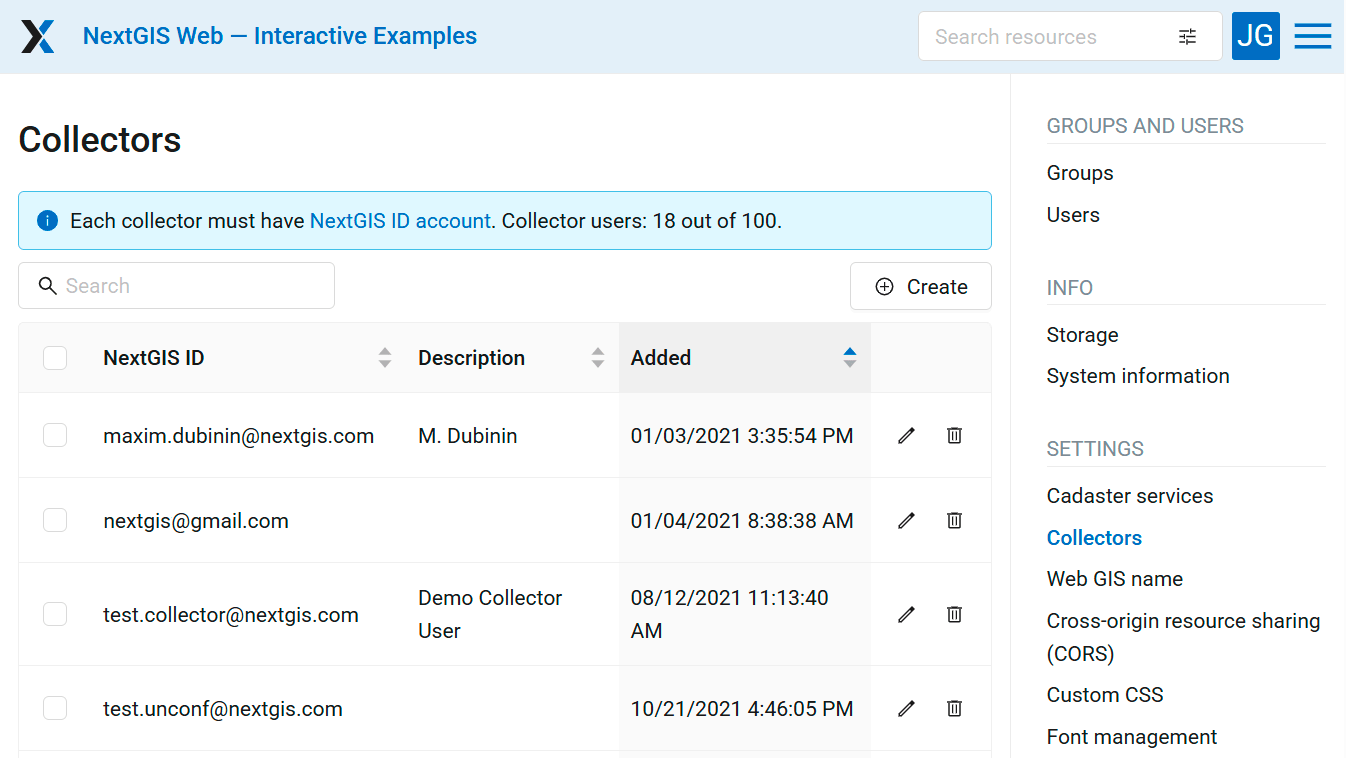
Fig. 664. List of collectors#
On this page you can:
Change the display name (= description) of a collector;
Add new collector;
Delete collector from the list (if you just need to remove collector from a project, untick them in the project settings instead).
To add a new collector click Create. In the pop-up window enter NextGIS ID email of the user and a description.
Note
We recommend entering the user’s full name to the “Description” field in order to have data about all NextGIS Collector users in one place.
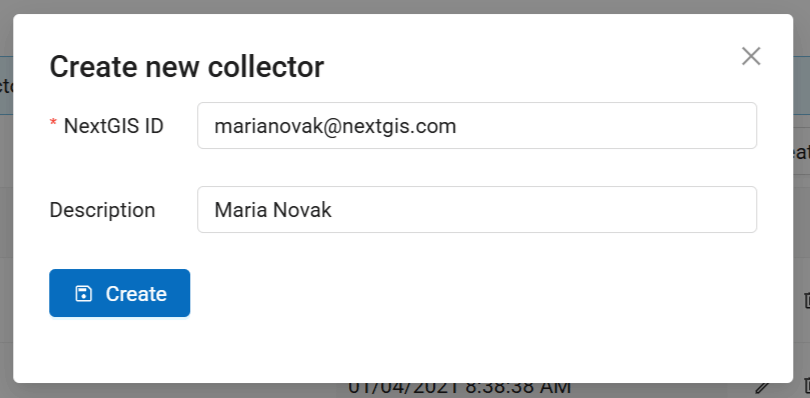
Fig. 665. Adding a new collector#
Note
If you need more Collectors, upgrade to Premium subscription plan or deploy NextGIS Extended on your own server.
You can control which of the collectors are included in individual Collector projects. It is manage in the project settings.
To join a project, collector must install NextGIS Collector mobile app and sign in with NextGIS ID.
Form for data collection#
For a vector layer you can create a custom form. It provides a user-freindly interface for entering and editing attribute values.
When you create a Collector project using the set up wizard, forms are automatically created for all included layers.
To create a new form:
Open the resource page of the layer, click Create resource and select “Form”.
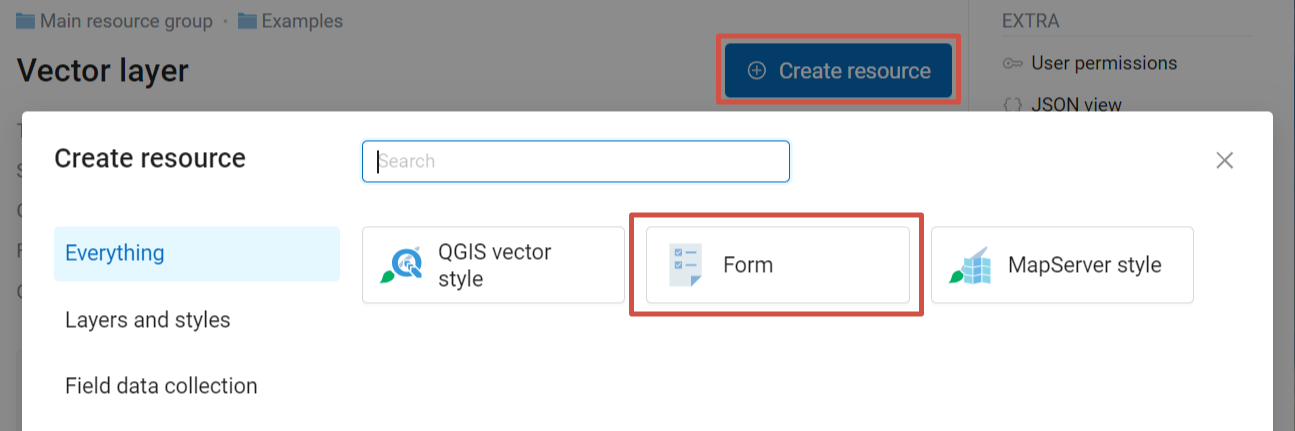
Fig. 666. Selecting “Form” resource type#
In the opened window on the Form tab you have two options:
build a form;
upload a NGFP file.
To create a new form in the online builder, drag the elements from the list on the left to the middle field. Click on the element to modify it and select the field in which this data will be stored.
If your layer already has attributes, you can select the corresponding field for each element as you add it to the layout.
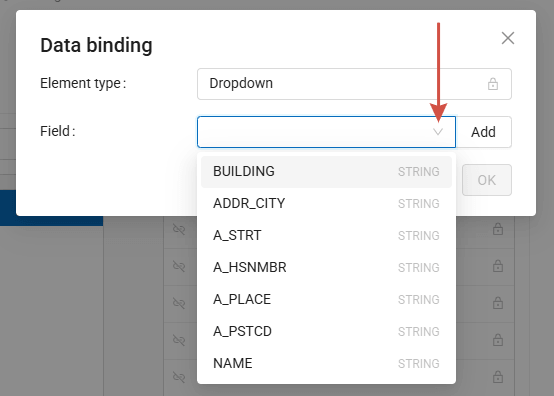
Fig. 667. Selecting a field for the element#
Or, you can add new fields for the elements. This allows to create an empty layer, then set its structure by creating a form.
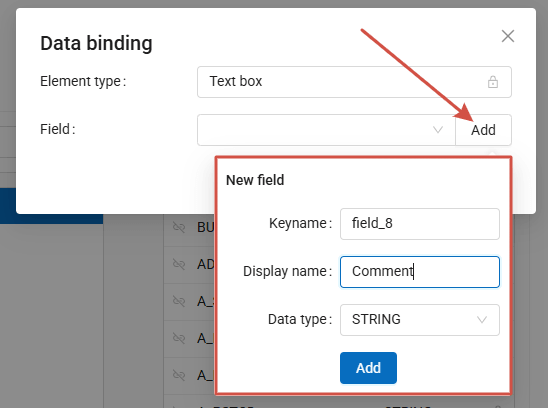
If you tick Add absent fields to layer, new fields for the added elements will be added to the layer.
Click on the element in the central section to view and modify its properties. More on properties of each element type.
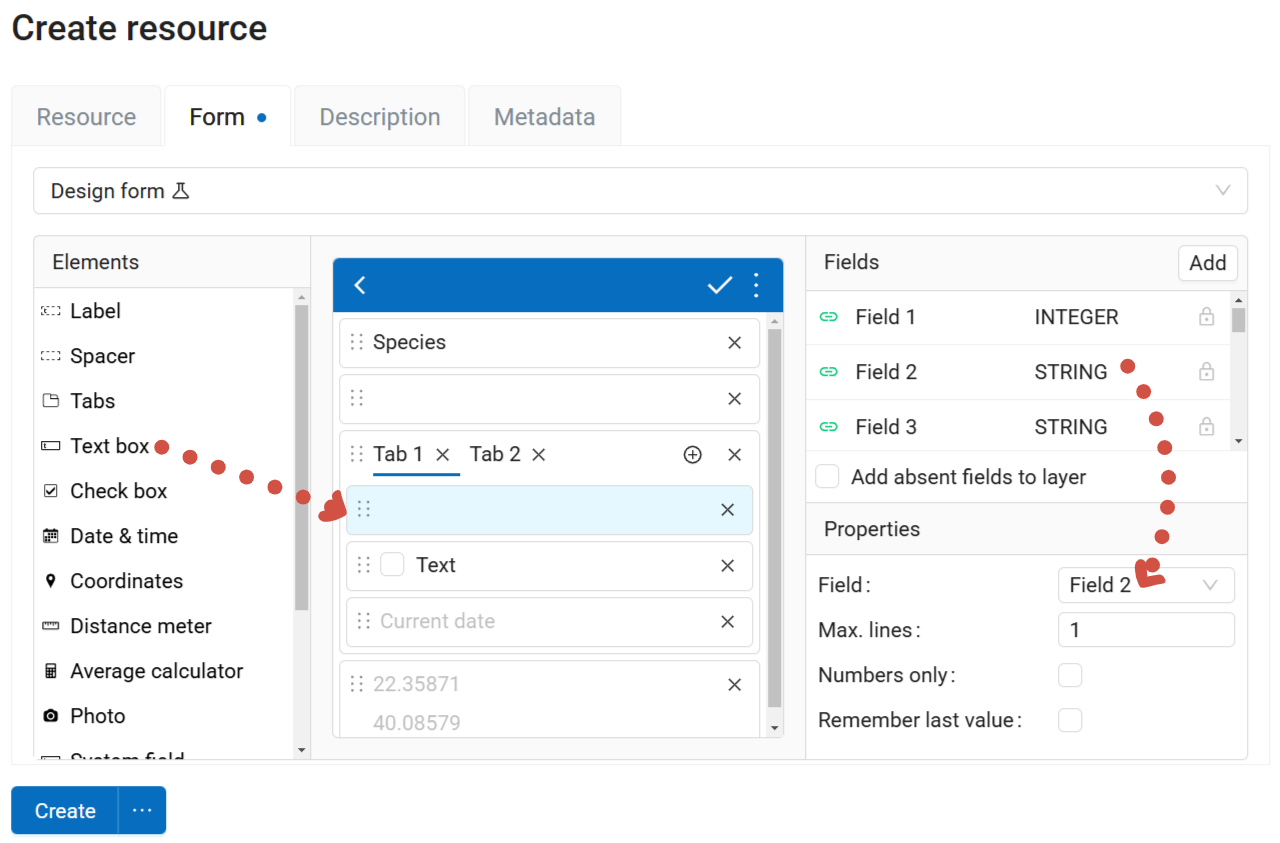
Fig. 668. Building a form online. Properties of the “Text box” element are displayed#
You can set a display name on the Resource tab and add description and metadata on the corresponding tabs.
Click Create to finish the process.
You’re redirected to the page of the form resource where you can preview the newly created form.
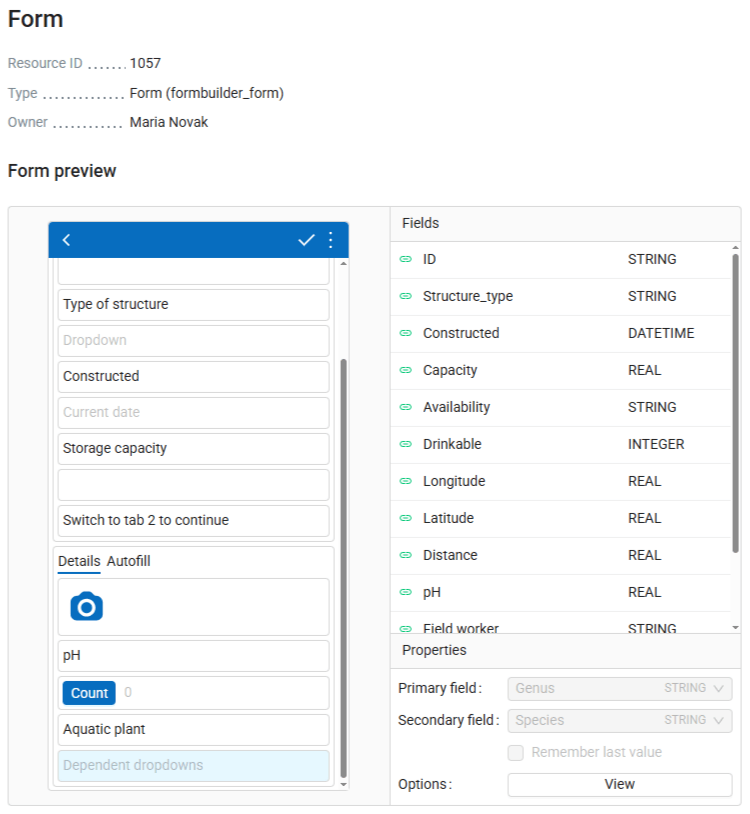
Fig. 669. Preview of the form#
Where you can use the form:
mobile app NextGIS Mobile, when you add a layer, the form will be available for editing data in the app;
in a data collection project in NextGIS Collector app;
while editing features on a Web Map.
To use a form on the Web Map, activate the checkbox on the Settings tab of the form.
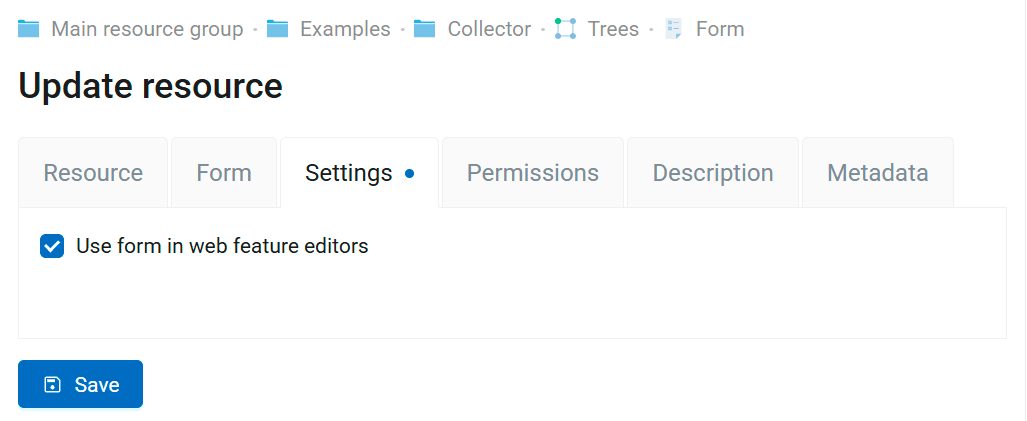
Fig. 670. Enabling form for use on Web Maps#
Form can be edited. Press the pencil icon next to it or open the resource page and click Edit. If the form was uploaded from a file, on the Form tab select Design form from the dropdown menu.
You can have multiple forms for one layer. Include different forms in different Collector projects or add several forms for one layer in one project.
After a form is modified:
in NextGIS Collector select “Change project” and re-join the project. The new form will be uploaded, allowing you to continue collecting data to the same layer.
in NextGIS Mobile delete the layer and add it again.
on a Web Map exit the Edit mode and enter it again.
After that the modified form will be available.
See also
Seems confusing? Check out our tutorial Collect Spatial Data in the Field that guides you through the whole process step-by-step.